How forestry mulching works
Vegetation is processed on site
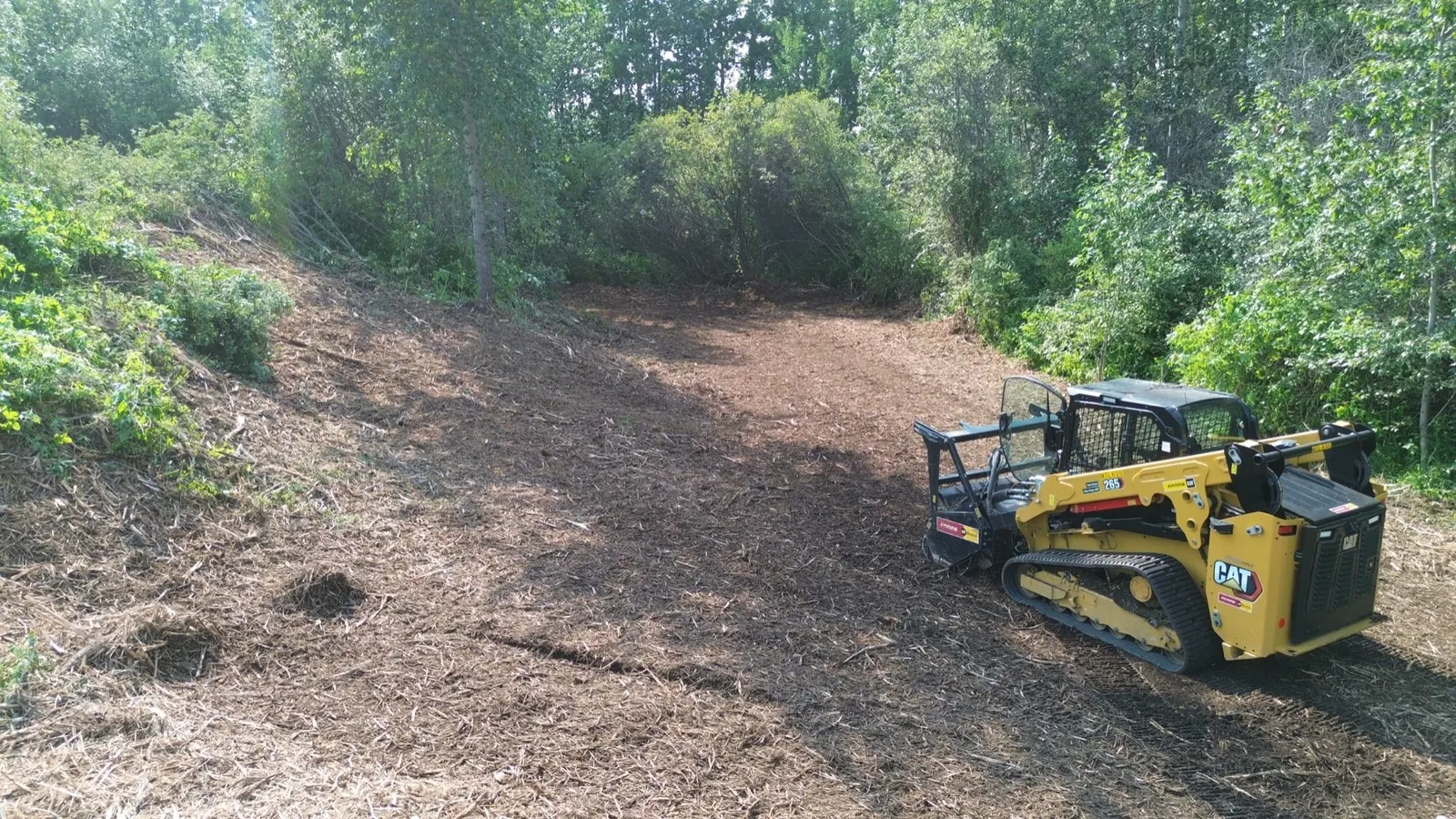
Suitable brush and woody vegetation are reduced at ground level, leaving a layer of mulch across the work area.
Roots generally remain
Forestry mulching is mainly surface vegetation work. Root systems and some below-ground material stay unless separate ground work is included.
Selective work is often possible
Marked trees and buffers can often remain where operating room allows.
How traditional clearing differs
More removal and handling may be involved
Larger material may be cut, piled, hauled or processed through a different method.
Ground disturbance can be greater
Stump removal, grubbing and grading can disturb the soil more than surface mulching, but may be necessary for the next use.
When each method fits
Mulching fits vegetation management
Acreage cleanup, trails, fence lines, pasture margins and access often benefit when a mulch finish is acceptable.
Traditional or combined work fits deeper preparation
Construction, major grading or areas that require root removal may need work beyond mulching.
Hybrid projects are common
Mulch first, then target the ground work
Some properties benefit from efficient surface clearing followed by selective stump work or dirt preparation only where it is actually needed.
Define each step in the quote
The finished result should be clear before deciding whether one method or a combination offers better value.